
Description
Article no.: 297025
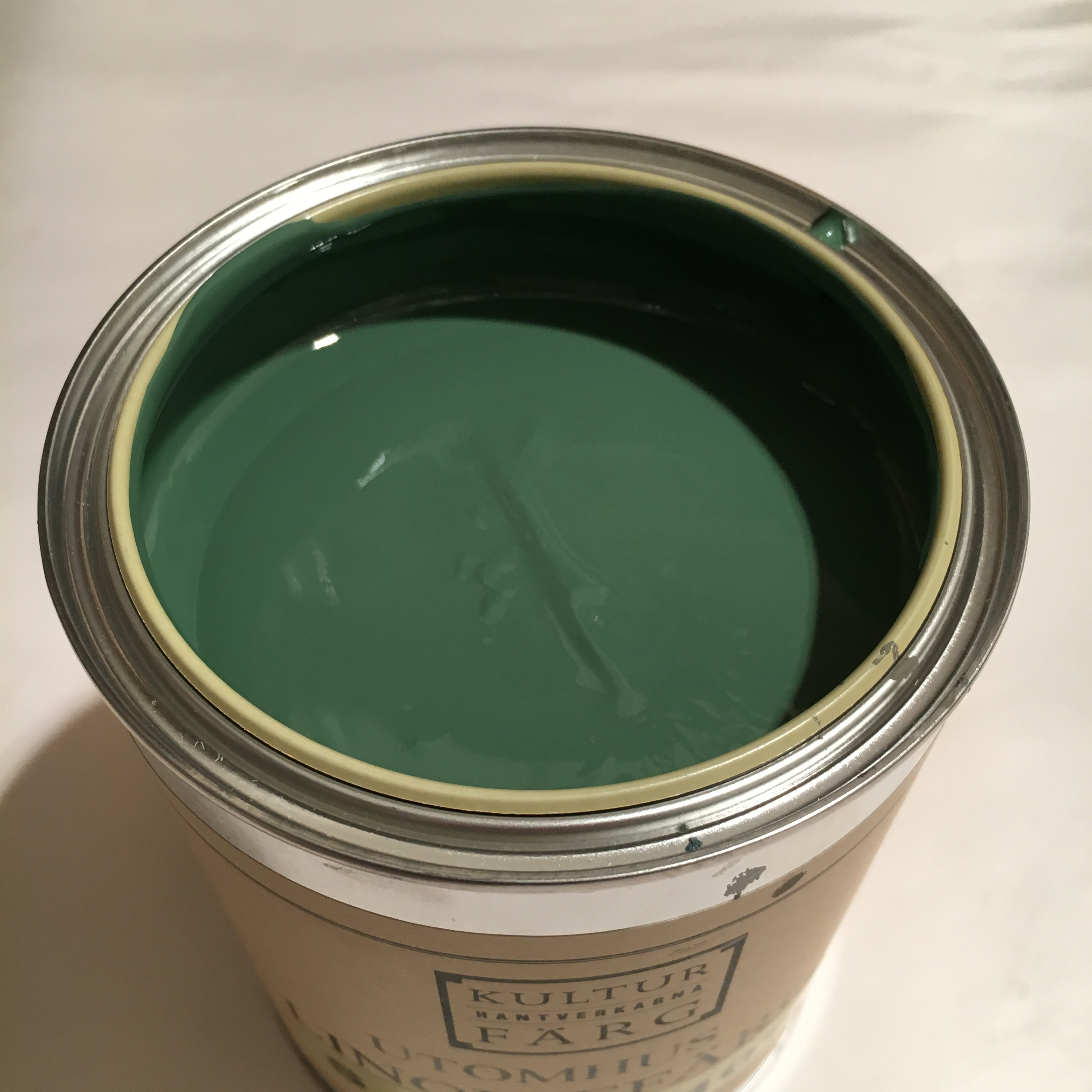
Linseed oil paints are one or our oldest types of paint, and have been in use for more than 500 years. The paint has a living, beautiful and durable surface and contains different linseed oils and pigments. Linseed oil paint permeates the surface and provides good protection against water and dirt. Linseed oil paint gives you the most paint for your money, starting at 15-18 m² per litre of paint. It is easy to re-do as long as you look after the old linseed oil paint – brush away old paint and apply a new coat. As it contains no water or chemicals which evaporate by themselves, you should only apply a very thin coat. Linseed oil paint works on most surfaces including wood, sheet metal, iron, rendering, plaster, clay, brick – indoors or outdoors.
The outdoor paint is based on raw linseed oil, linseed stand oil and oxide pigment. For many years, we have noticed that the mix of raw linseed oil and linseed stand oil delays depletion, chalking and associated maintenance. We have also reinforced the outdoor paint with fungicides and zinc to combat mould. The indoor paint is based on boiled linseed oil and oxide pigment, and is free from fungicides and zinc, meaning it is fleck-free. None of the paints contain solvents.
We have a wide range of beautiful standard colours, classic as well as modern. If you are looking for another shade, we can break it down to find your Custom colour. First, we create an NCS or RAÄ colour. If you are not satisfied, we then tint the paint. We always tint linseed oil paint with linseed oil paint, on a scale of four decimal points. No tints are done using synthetic pastes.
Consumption: 1 litre will cover 15-20 m² depending on the surface. An even surface normally requires at least three coats.
Drying: approximately 24-48 hours, with some colour mixes taking longer.
Used for: Wood, glass, sheet metal, iron, rendering.
Cleaning of tools: Tools and hands are best cleaned with soap and water.
Yellowing of white linseed oil paint: Linseed oil paint is photochromatic, which means that it naturally yellows unless it is exposed to light.
Painting outdoors
1. Clean away any large dirt particles and remove mould with anti-mould preparation. Slightly dirty surfaces can be cleaned with water and washing up liquid. Always treat new wood with anti-mould preparation.
2. Remove all old, loose paint with a scraper. Acrylic paint can be removed in its entirety using a heat lamp and scraper. Old oil paint and linseed oil paint that is loose can be removed with a scraper. The remaining paint can be left in place. Remove sharp paint edges with sandpaper.
3. Apply a base coat of Outdoor Linseed oil paint to unpainted surfaces, mixed with approximately 20% turpentine. Allow to dry for 24 hours. If the woodgrain has risen, carefully sand it down with fine sandpaper.
4. Apply second coat of Outdoor Linseed oil paint to unpainted surfaces, mixed with approximately 10% turpentine. Allow to dry for 24 hours.
5. Apply a final coat of pure Outdoor Linseed oil paint.
6. If the surface is still mottled, apply one more coat.
Linseed oil paint tip:
Stir the paint in the can thoroughly. Never stir surface skin into the paint. The surface must be dry. The moisture ratio of the wood must be below 18%. The temperature should at no point drop below 5°C. Good ventilation helps the linseed oil paint dry. Major cracks are treated with linseed oil and filled in with linseed putty outdoors and linseed filler indoors.
Linseed oil paint should always be applied in thin coats with only a little bit of paint on the brush. We recommend using brushes with pig’s bristles. Dip only the edge of the brush into the paint. The paint is applied with a firm press of the brush. Stroke the wood lengthwise. Then use the brush to apply the paint with a criss-cross stroke. Finish by smoothing out the paint with a light tough, first across and then lengthwise again.
At least three coats of linseed oil paint is needed for a smooth surface finish. After the first coat the surface will look glazed. The colour should not be opaque and the surface almost becomes matte. After the second coat, you can still sense the wood through the paint, and you may sense differences in sheen around knots or where the paint is naturally seeping into the surface differently. After the third coat, the paint will be opaque or almost opaque, depending on the colour, how thinly the paint has been applied, and how the paint seeps into the surface. For an extra fine surface, you can polish it lightly with sandpaper between each coat. Coats of linseed oil paint are so thin that you can add extra coats or touch up a surface multiple times at no detriment to the result. When the paint is applied in overly thick coats, it dries very slowly, leaving clear brush strokes and a mottled finish. The paint also becomes less durable.
Indoor Linseed oil paint should only be used indoors. Outdoor Linseed oil paint contains raw linseed oil and linseed stand oil which makes it slightly shinier than Indoor Linseed oil paint which contains boiled cold-pressed linseed oil.
Linseed oil paint glazing;
If you want a glazing linseed oil paint, you can mix one part linseed oil paint with one part linseed oil and one part turpentine. The linseed glazing becomes thin and has a glazing effect. This solution may however be somewhat mottled in appearance. Linseed glazing works both indoors and outdoors. Outdoors, glazing is not as durable as linseed oil paint and the maintenance will be roughly the same as for Slamfärg.
extra tip! Place the brush in raw linseed oil the day before starting painting (linseed oil covering the bottom half of the brush). This makes the brush inflate around the metal and lacing, meaning it will lose fewer bristles at the start. It is a good idea to leave the brush in raw linseed oil between coats. Use the brush on some newspaper to remove the linseed oil before starting to paint. When the paintings is finally done, clean the brush and tools in concentrated soap.
Files and media
 | Attached file |